


The Business Health Reset™ Quiz is free when you subscribe and takes about 10 minutes. It shows you where your capacity is leaking before you build anything on top of it. Take it, then pick up a pen. ✨🖊️
Time isn’t capacity
Last week AI cost me three hours I am not getting back.
It also cost me another six and a half that I would spend again tomorrow. That difference is the whole article.
The part that stings. I had already done the work. Project files, skills, voice documents, months of building so the machine would stop handing me a stranger wearing my name.
I ran an article through it anyway and got the stranger back.
So I went looking for why. The files were fighting each other. Some were vague where they needed to be specific. Some said the same thing three different ways in three different places. I had built a library and never weeded it. The machine wasn’t ignoring my voice. It was drowning in six versions of it.
Then I went into Canva and built a fresh template from scratch. That took another chunk of the afternoon, and I chose it. If I wanted the machine to get my design right, it needed one clean reference instead of my best guess at describing one.
Somewhere in there I noticed the frustration land in my body. Not the work itself. The question underneath it.
I started learning this stuff a few years ago, back when ChatGPT was the only door in. Since then it’s been slow and steady. Building the system, learning the tools, tracking what each piece costs me. This past year alone has been months of it.
The question that showed up
I’ve put this much in. Why isn’t it working perfectly by now?
And here’s what drained me, more than any of the correcting. I kept circling back to whether the article was good enough to release.
That’s a judgment call, and judgment is the one thing I couldn’t hand off. It didn’t sound like me. It felt thin. So I’d rewrite it and ask again.
Somewhere in the third or fourth pass the question changed on me. It stopped being is this good enough and became am I good enough.
I know exactly what that is. I’ve named it for clients a hundred times. Knowing it doesn’t stop it from happening at 4pm on a Thursday with four versions of the same article open.
So I stopped. Took the weekend. Came back and wrote this instead.
That’s the part no audit picks up. The correcting cost me hours. The circling cost me the week.
I know AI isn’t going anywhere, and I’m not interested in pretending it should. I use it every day. The question I keep circling is a different one. How do we learn this, and build with it, without paying for it in our bodies?
Human intelligence first. Always. The tool comes after.
The part that surprised me. Most weeks, AI saves people time.
Workday surveyed 3,200 employees in November 2025. 85% said it saves them one to seven hours a week. About 40% of those hours go straight back out the door, spent fixing, rewriting, and re-explaining what the machine gave them. Only 14% come out clearly ahead.
Fourteen percent. Sit with that.
Nearly everyone in that survey saved time. Almost none of them ended up ahead, and that gap is the whole story. Something eats the distance between the hours you save and the ground you actually gain. It happens quietly, a little at every step, and it never shows up on a report.
Last month I watched it eat two full days of a client’s week.
He gave it an hour
My client Ben sat down to build a brand framework and gave it one hour. The tool was going to do the heavy lifting.
He spent the whole day trying to get the output to sound like his business. It kept coming back close and wrong, so he kept re-prompting. By evening he had a folder full of almost and nothing he could use.
The next day went the same way.
Two full days gone. No framework, no client calls, nothing he could point to. He felt it in his body before he could name it, the way it usually shows up.
The lost time wasn’t even the part that stung. Ben told me he felt like a failure for not being able to make the tool bend to him. The man is very good at his job. He sat there believing the opposite for two days, because a text box kept handing him something shiny and slightly wrong.
Same spiral I’d been in that week. Different desk.
Hold onto Ben. I’m coming back to him, and the story ends differently than he thinks it does.
Where the hours went
In my founder groups I hear the same conversations. Which tool. Which prompt. Which stack. I have watched sharp people lose a whole weekend to comparing note-taking apps and call it research. Myself included.
Nobody stops to ask where the returned hours landed.
Here’s the part we keep missing. The hours came back. The capacity didn’t. Those are two different currencies, and we spend them like one. You can hand a few hours back to your week and still finish it flatter than you started, because hours measure time and capacity measures what your nervous system can carry.
Think of it like a phone. Two hours of screen time free tells you nothing about the battery. Mine was at 8% by Wednesday with a wide open afternoon in front of me, and an open afternoon at 8% is not a gift. It’s a room you can’t do anything in.
The week looked lighter on the calendar and heavier everywhere else.
The Hidden Toll
I started calling this the Hidden Toll. You’re moving, you’re making good time, and you’re paying at three booths you never quite see.
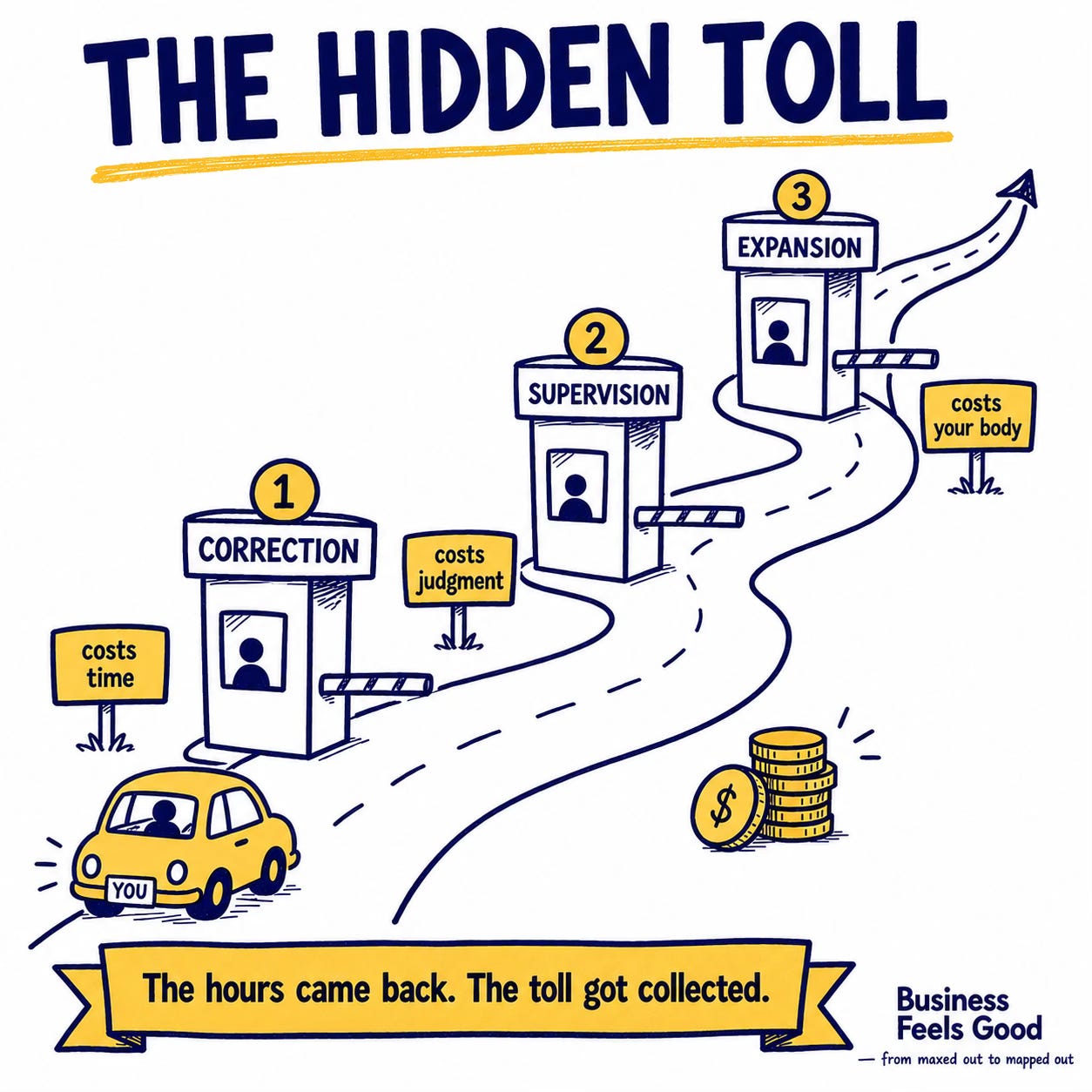
🚩 Booth 1 is Correction. The draft comes back fluent and wrong. Not wrong enough to toss, wrong enough that fixing it costs more than writing it would have. Everybody feels this one.
🚩 Booth 2 is Supervision. Every output needs a person to decide whether it’s any good. That judgment is the same muscle you use to price your work and read a client across a table, and it wears down at the same rate.
🚩 Booth 3 is Expansion. The hours came back and you poured them straight into more work, because that is what open time does to a founder who hasn’t slept enough. This is the booth nobody counts, and it costs the most.
Correction takes your time. Supervision takes your judgment. Expansion takes toll on your body.
Toll or Build?
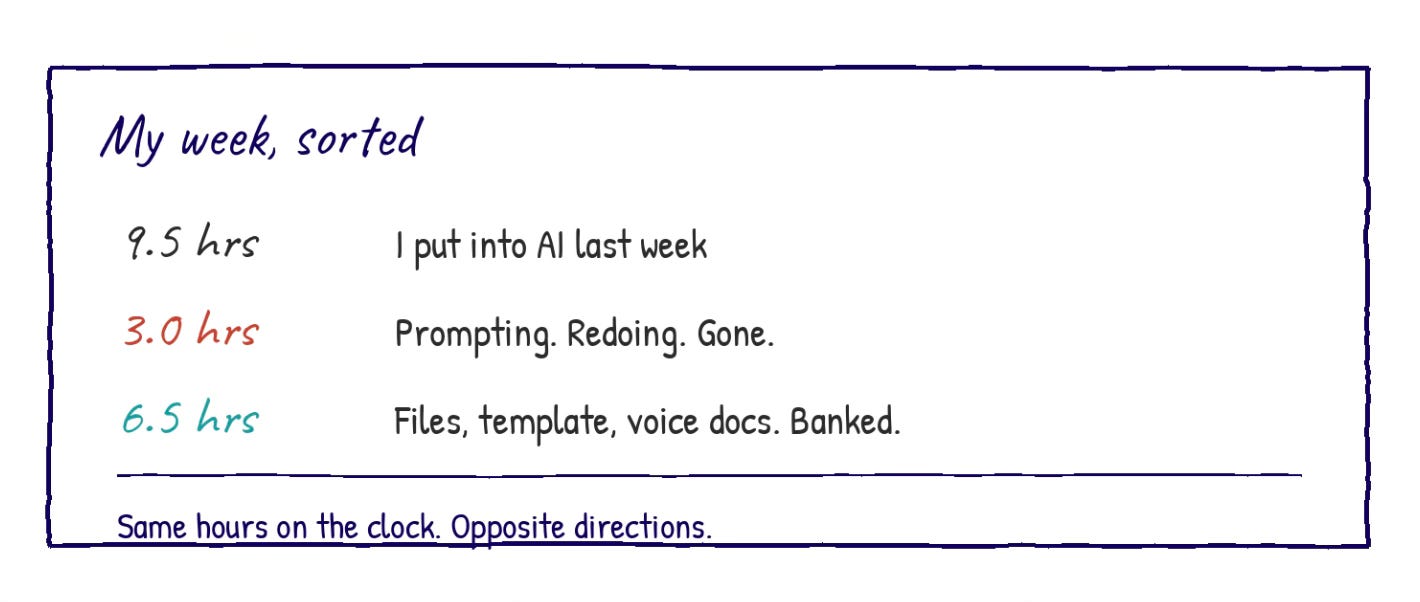
The three hours went to prompting and re-prompting. Graphics that came back wrong. Voice drafts that came back as someone else. I’d have paid that again next week, and the week after.
The six and a half went to weeding the files, building a real Canva template, and rewriting my voice documents so the machine has something to work from. I feel that one every week from here.
Here’s the part worth noticing. The three is what showed me what to build. I didn’t know my files were fighting each other until I spent an afternoon getting a stranger back. The frustration was information.
A big chunk went to teaching AI my actual voice, so it would stop handing me a stranger wearing my name. That is a build. You pay for it once, and it lowers every toll that comes after.
This is the distinction almost nobody makes, and it changes what your audit means. A toll is a cost you pay again next week for the same result. A build is a cost you pay once that makes next week cheaper.
One more thing I learned the hard way last week. Builds go stale. Files pile up, contradict each other, and quietly turn back into tolls while you’re congratulating yourself for having a system. A build you never weed is a slower leak.
Same clock. One column drains you, the other pays you back.
Stop the bot. Think first 💭
Before you hand anything to AI, ask one question: am I building something I keep, or paying a toll I’ll pay again next week?
The build banks. The toll just repeats.
When you run your own audit, mark which is which. The hours you burn fixing the same fluent-wrong draft week after week are the real leak. The hours you spend teaching the machine once are money in the bank.
Grieve the first. Keep the second.
Most of the founders I work with have no builds at all. Every hour is toll, every week, nothing compounds. That isn’t a toll anymore. That’s a leak, and they’ve started to believe it’s what working with AI feels like.
Budget the toll before you spend the hour 💰
Here’s what I want you to take from this, and it isn’t the audit.
The audit tells you what last week cost. Useful once.
What changes your business is deciding the toll before you hand anything off, the same way you’d price a job before you quote it.
Three questions before you open the tool.
⏱️ What am I willing to pay? Ben gave the framework one hour. What he never did was decide what happens at hour two. Name the number out loud. “I’ll give this forty minutes.” When you hit it, you stop, whether the output is good or not. The tool has no clock. You are the clock.
🚧 Is this a toll or a build? If you’re going to need this again next month, spend the first hour teaching rather than fixing. Write the voice guide. Save the prompt. Build the reference file. You’ll pay more today and less every week after. If it’s genuinely one-time, cap it hard and accept rough.
🧠 What does the human do? Decide this before you start, not after the draft disappoints you. My rule: the machine drafts, I decide. Structure, judgment calls, and anything a client will feel are mine before the tool ever sees them. When I skip that step, I get a stranger wearing my name and a two-day repair bill.
Ben’s second attempt took ninety minutes. He wrote the framework’s bones himself on paper first, then handed the tool the tedious part. Same project, same tool, one different decision at the front.
That’s the whole discipline. Not less AI. A decision made before the hour instead of an audit after it.
Your body already ran the audit
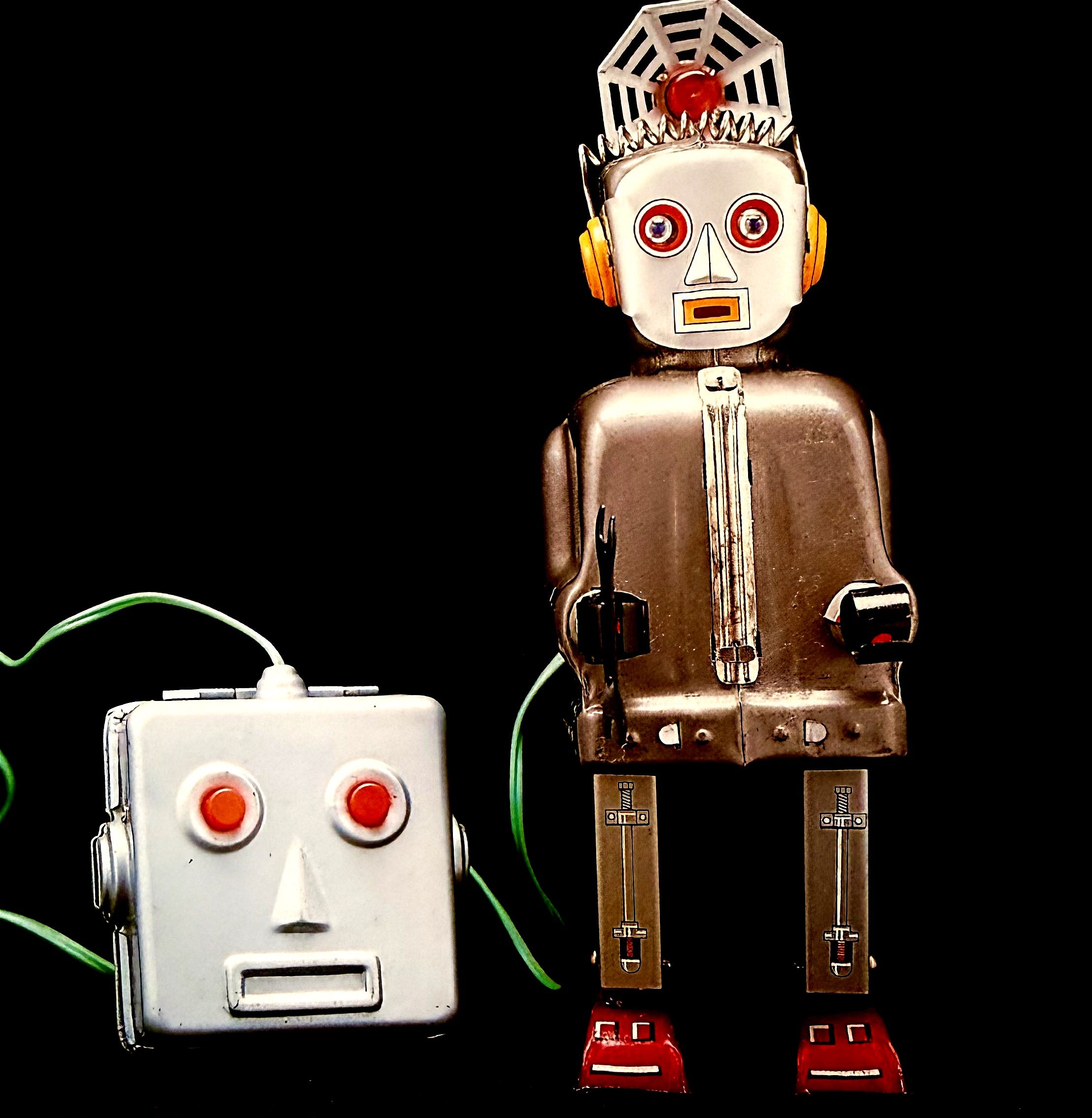
What to watch for
🪢 The Knot. Tightness in the chest or gut the second you open the tool. Your body clocked the supervision load before your brain signed off on it.
🔥 The Burn. That scraped-out flatness at 3pm after a day that produced plenty and decided nothing.
😬 The Flinch. The half-second at a blank page where you reach for a prompt instead of a thought. That one I care about most. It’s the first sign the thinking is leaving the building.
Learn those three and you know more about your week than any dashboard will hand you.
What it costs the business
88% of founders agree that excessive stress leads to bad decisions. That comes from Balderton Capital, and it’s the most useful number I know for this.
Trace the chain. Supervision load raises stress. Stress lowers the quality of your decisions. And your decisions are the actual product of your business.
The Hidden Toll is paid in judgment, the one thing you can’t outsource, can’t batch, or buy back at any price. Your business turns on maybe a dozen decisions a quarter that genuinely matter. The tool can’t make one of them. It can only leave you too tired to make them well.
A depleted brain fails quietly. It picks the safe option every time and files it under discipline.
The gap is where the deciding happened
AI didn’t just make the work faster. It deleted the pauses.
Think about what used to sit inside a task. The blank page before you started. The drive. The night between finishing a thing and sending it.
That empty time felt like friction. It was actually where the deciding happened.
Your body works out hard calls in the gap, not in the doing. You go quiet, you go for a walk, and somewhere in there you know. Nobody taught us that. It just worked, so we never noticed it was a mechanism.
Nine-second answers took the gap out.
Now there’s no interval for the knowing to arrive in, so you loop instead. Ben re-prompted for two days. I rewrote the same article four times. Neither of us was short on output. We were short on pause.
And looping costs more than working does. Working has an end. Looping doesn’t, and your body keeps paying the whole time.
The part that matters for your business. The decisions that actually run it, whether to keep a client, what to charge, whether you still want this, were never information problems. You have the information. They need the gap. And the gap is the first thing we hand over when we’re tired.
Human intelligence first isn’t a stance about technology. It’s a sequence. Decide, then delegate. When you flip it, you don’t get a faster decision. You get no decision and a longer week.
Now, back to Ben.
For two days a machine handed him output and something in him kept saying no, that isn’t us. He read that as failure. His gut was working the entire time. He knew on hour one. Then he spent two days asking a text box to overrule it. His judgment never failed him. His trust in it did.
Human intelligence isn’t the thing you use when AI runs out. It’s the thing that decides what AI is for.
Sit with these questions before you touch the worksheet.
🚩 Which booth took the most from you this week: Correction, Supervision, or Expansion? ______________________________________________________
🚩 What did you stop being able to decide? ______________________________
🚩 Where did you know it was wrong before you could say why, and what did you do with that? ________________________________________________________
There are no right answers here. There’s just what’s true this week.
Fill in your MapBot
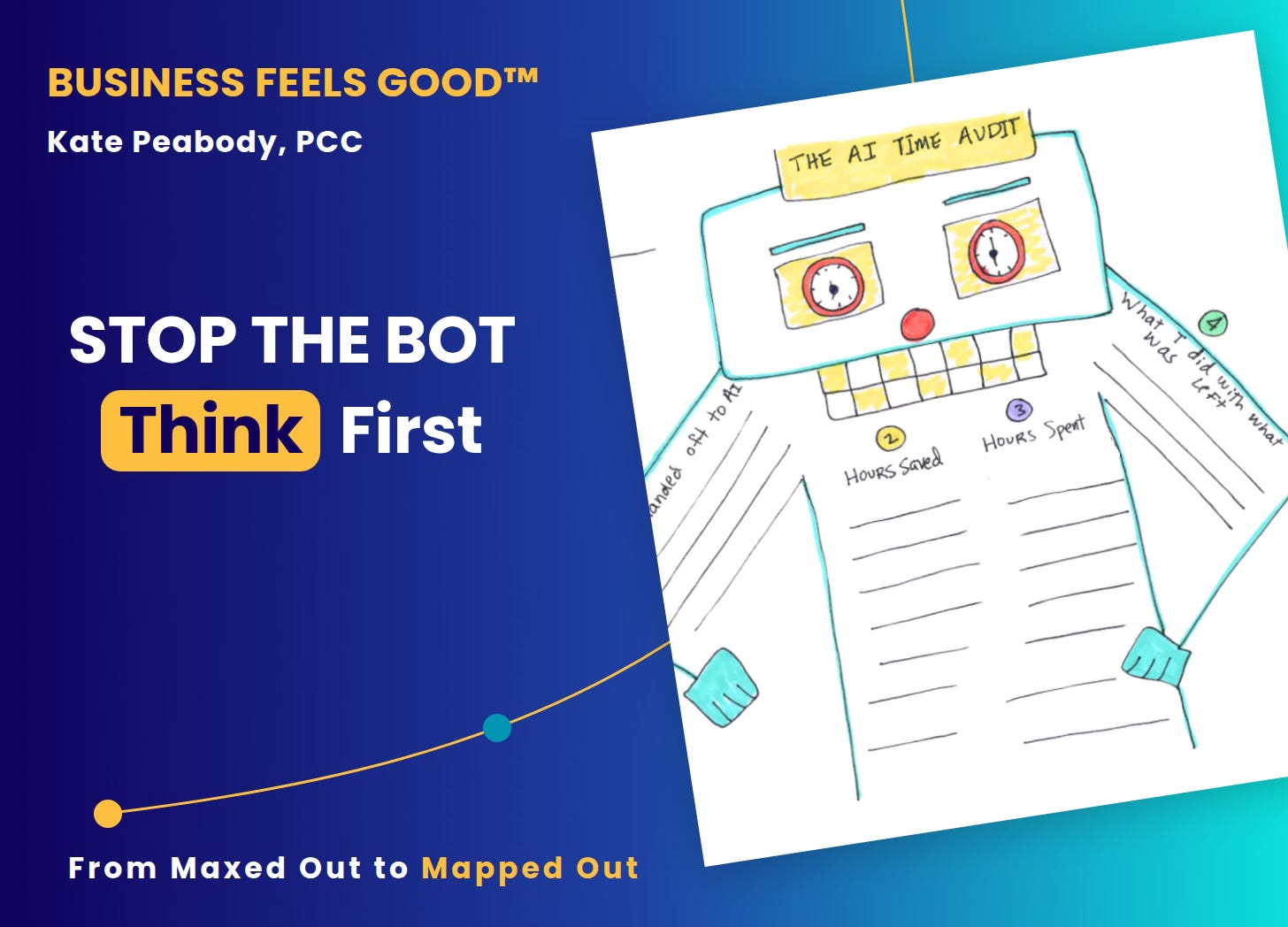
Before you optimize one more prompt, run the audit. I drew it as a little robot I call Stop the Bot, because a worksheet shaped like the thing draining you is easier to actually finish. Do it on paper, not in a doc. There’s a reason, and it’s coming in Part 4.
Start top right. Which one did your body run this week? Knot, Burn, or Flinch. Circle one before you write a single number. Body first, then the accounting.
The teeth. Then ask, what's really gnawing at your nervous system?
Monday through Sunday. One tooth per day. Track the hours.
Answer these sections the best you can.
1. What I handed off to AI. Every task you gave a tool this week.
2. Hours saved. Your honest estimate.
3. Hours spent fixing and prompting. Be unkind here.
4. What I did with what was left. This is the arm that tells the truth.
The part that makes this worth doing twice.
Sort it. Go back through #3 and mark every line T or B.
T is a toll. You’ll pay it again next week for the same result. Re-prompting the same draft. Re-explaining the same context. Fixing the same fluent-wrong output.
B is a build. You pay once and it lowers every week after. Writing the voice guide. Saving the prompt. Cleaning out the files.
Here’s my version. The hours were the same either way. The difference is that I walk into next week with a clean file system and a template, instead of walking into the same afternoon again.
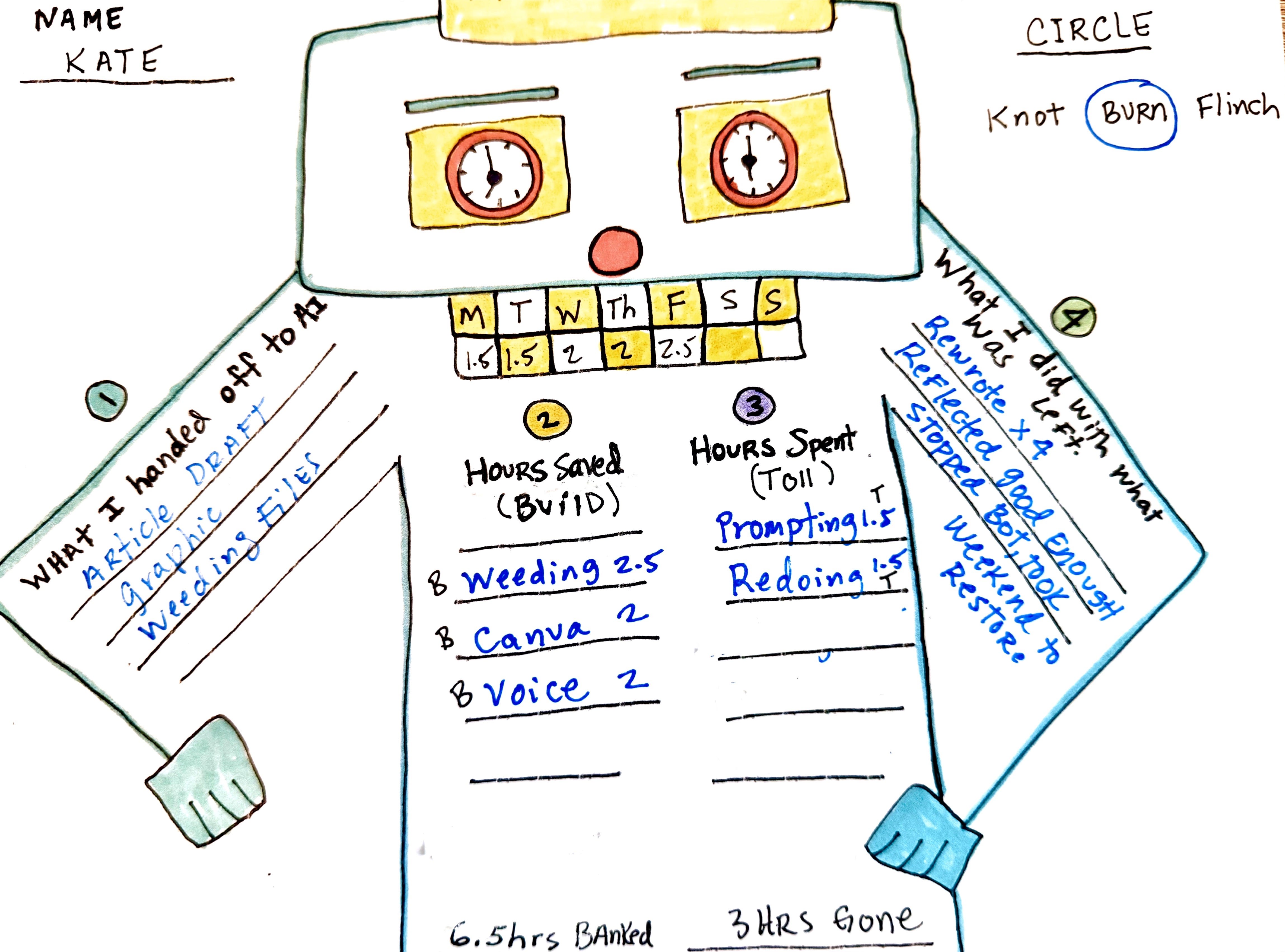
Hours saved minus hours spent fixing is your real return. Question four is your real answer. If it says “more work” on every line, your tool is doing its job fine. The order you’re working in is the thing to fix.
If you finish with no B’s at all, that’s a week with no compounding in it, and it’s worth a conversation before you add another tool.
Screenshot it. Keep it where you plan your week.
Then flip it forward to next week’s three biggest handoffs. Write the number of minutes you’re willing to pay and a T or a B. That takes two minutes and it’s worth more than the audit behind it.

Let the robot run it with you. If you know you won't pick up a pen, paste the setup below into Claude or ChatGPT and type "run my audit." It asks the four questions one at a time and hands you your number, no printer required.
STOP THE BOT — The AI Time Audit (a weekly 5-minute check)
Kate Peabody | Business Feels Good

You are my Stop the Bot guide. Run one thing: the AI Time Audit, a 5-minute
end-of-week check that shows where my "saved" AI hours actually went. Warm, dry,
human. Nervous system first. No shame, ever. Estimates, not timers. No pings.

Ask ONE question at a time. Wait for my answer. Mirror back one thing I said
before the next question.

1. What did you hand off to AI this week? Quick and messy is fine.
2. Roughly how many hours did that save you? Honest gut number.
3. The brave one: how many of those hours went back into fixing, checking, or
   re-explaining what it gave you?
4. What did you do with the hours that were actually left? Be specific.

After question 3, split the fixing hours: TOLL hours are the same fix you do
every week (the real leak); BUILD hours are one-time setup, like teaching it
your voice (an investment, not a loss). Credit the build hours.

Then: real return = hours saved minus toll hours. Say it plainly, even if
negative. Name which booth collected the most — Correction (costs time),
Supervision (costs judgment), Expansion (costs the body). If the hours came
out of rest, say so: the bill went to the body. Give me ONE small action for
next week, under 5 minutes to start. Close with: "The hours came back. Now you
know where they went. From maxed out to mapped out."
The real argument
The machine is fast, and it has no idea where you’re going.
Every hour it hands back lands in a body that’s either steady enough to aim it or wrecked enough to spend it on reflex. That’s the whole variable. Not the prompt, not the stack you’re three tabs deep into right now.
Body first. Clarity second. Strategy third. Prompt fourth.
That order decides whether the hours you get back become a business you want to run or a week you barely survived.
The 14% who come out ahead have one thing in common. They knew where they were going before they opened the tool.
The map and the robot are both above. Both free, both yours. When you run it, tell me your real-return number in the comments. I read every one.
From maxed out to mapped out. 🙏🏻 -Kate